

Istanbul Tobacco Control Conference Pushes War on Safer Nicotine Alternatives
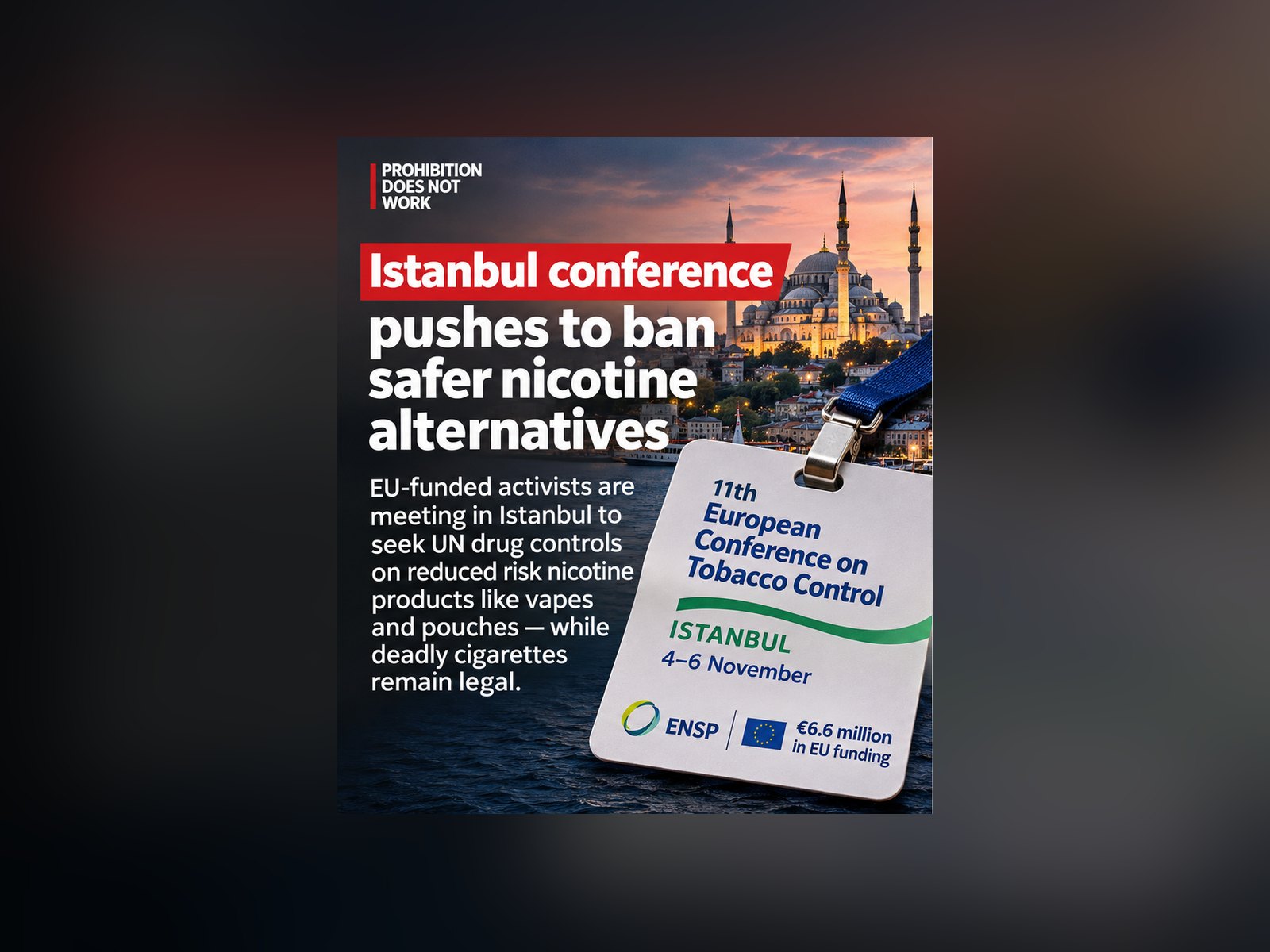

While millions of Europeans continue to smoke deadly cigarettes, anti-nicotine zealots gathering in Istanbul this week are pushing an extraordinary new proposal: bringing reduced risk nicotine alternatives under international drug controls, seeking to place the very alternatives helping smokers escape combustible tobacco in the same category as heroin, fentanyl, and other deadly drugs.
The European Network for Smoking and Tobacco Prevention, whose primary source of funding is the poor European taxpayer, having received 6.6 million Euros in EU funding, is hosting the 11th European Conference on Tobacco Control from November 4–6. A key focus of this conference is how best to manipulate governments to support Palau's request for nicotine to be reviewed under the UN's 1971 Convention on Psychotropic Substances.
The conference programme includes a workshop explicitly teaching activists how to recruit governments to support Palau's initiative, submit formal notifications, respond to WHO questionnaires and navigate the eventual UN voting process. Other sessions promote a so-called "Nicotine Endgame".
The parallels with recent revelations about WHO's approach to tobacco taxation are striking. As PDNW reported, officials at a WHO regional meeting openly discussed generating evidence, building media capacity and recruiting political support to advance predetermined tax increases. Now, in Istanbul, campaigners are being instructed on how to organise international support for new nicotine controls, all of it funded by European tax dollars.
Rather than allowing scientific evidence and real-world outcomes to determine policy, the emphasis appears to be on building the political machinery needed to deliver a predetermined objective.
The active denial of science is glaring.
Nicotine is addictive, but nicotine itself is not a carcinogen. It is the combustion of tobacco, not nicotine, that causes the overwhelming majority of smoking-related deaths.The International Agency for Research on Cancer and major international bodies and government agencies around the world all recognise that nicotine does not itself cause cancer, while substantial evidence demonstrates that smoke-free nicotine alternatives are far less harmful than cigarettes.
Yet the Istanbul conference is promoting international controls that threaten products such as nicotine pouches and vapes, while the deadly cigarettes they compete with would remain legally available. Apparently, helping smokers obtain nicotine without inhaling carcinogenic smoke is now the problem.
The timing is particularly extraordinary. As PDNW recently reported, WHO has acknowledged that Europe is falling behind on its public health targets. Meanwhile, Sweden, where safer nicotine alternatives are widely available, has reduced daily smoking to below five percent.
Rather than learn from this success, prohibition advocates are doubling down on policies already failing elsewhere.
The Netherlands offers a damning example. According to PDNW's research, following its 2024 vaping flavour ban, youth vaping more than doubled from 3.7% to 7.6%. Cigarette consumption increased by approximately 60 million cigarettes in 2024, while 27% of former vapers reported smoking more or starting smoking after the restrictions. These are the real-world consequences of targeting safer alternatives instead of smoking.
A tobacco-control movement that prioritises eliminating nicotine over eliminating smoking has lost sight of the fundamental purpose of public health. The objective should be fewer deaths from smoking, not fewer options for smokers trying to quit. If these radical activists in Istanbul get their way, the result will be more people smoking – and more people dying as a result.
Stay up to date
Join our mailing list for expert insights and global updates.
