

WHO Says the Quiet Part Out Loud: Decide on Higher Taxes, Then “Generate Evidence” to Sell Them
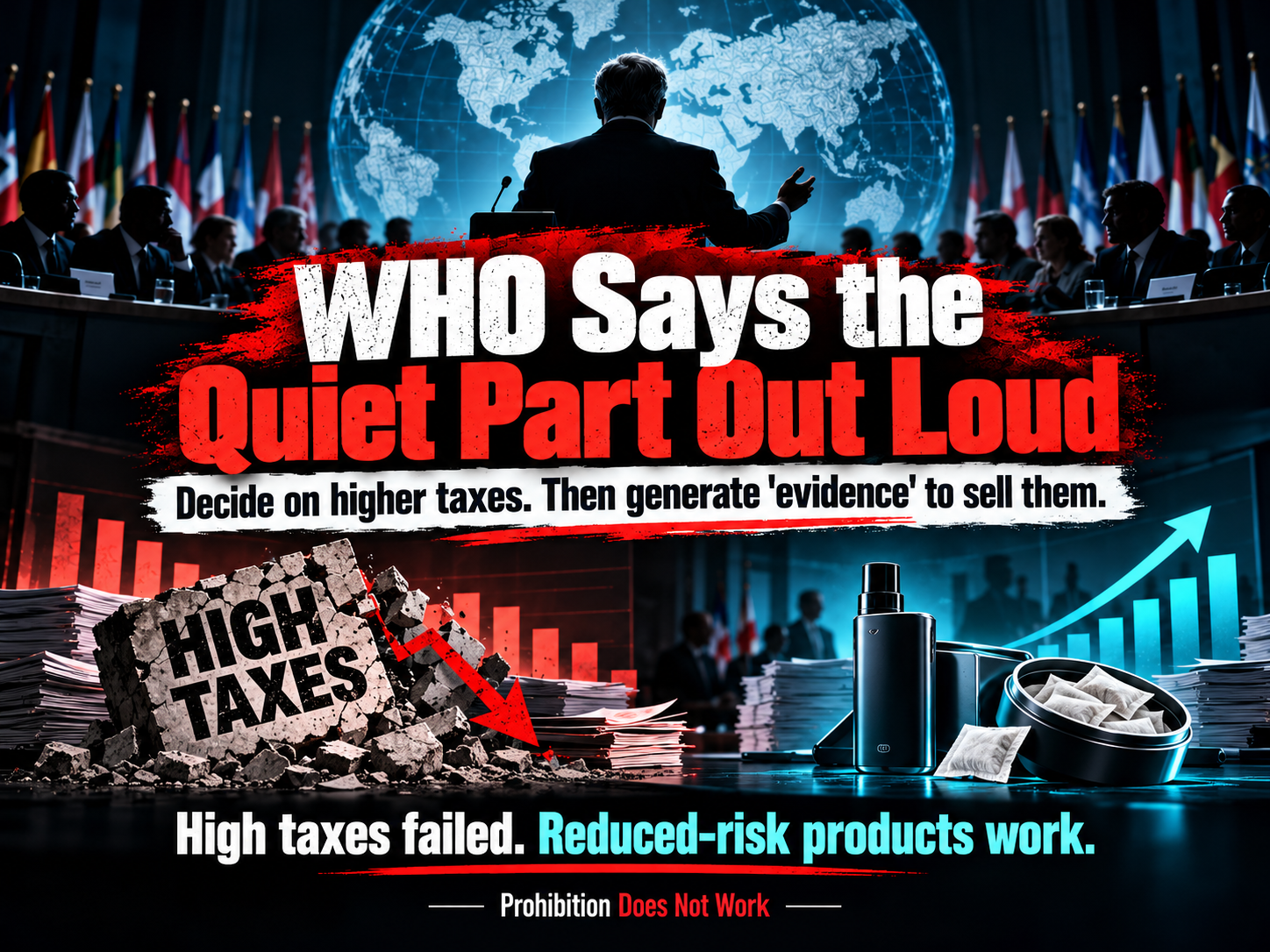

In an extraordinary session at the World Health Organisation Western Pacific Regional Committee, representatives provided a remarkable admission of how its tobacco-control agenda operates: decide on the policy first, generate the “evidence” to justify it, recruit political allies, and use taxpayers' money to sustain the campaign.
At an October 13 conference on health taxes, officials openly discussed how to overcome public opposition to their predetermined objective of dramatically increasing taxes on consumers across the world.
Rather than debating whether higher taxes actually deliver the best public-health outcomes, WHO's regional director urged participants to move beyond questioning whether health taxes work and concentrate on implementing them.
Vietnamese officials described working to “generate evidence,” build media capacity, and counter opposition to secure tax increases. WHO praised this approach, while representatives from Cambodia and the Cook Islands openly admitted how they created specific economic “models” not because they reflected reality, but just to persuade policymakers to support higher taxes.
Incredibly, the conference also celebrated using tax revenue to finance the very public propaganda campaigns to lobby for and promote their agenda. Vietnam reported approximately $58 million distributed through its Tobacco Control Fund, accounting for around 99% of the country's tobacco-control funding.
This session proved what many of us have been saying all along. The WHO is not an impartial medical body. It is not interested in science or evidence. It now freely admits it has a radical ideological agenda, and will manufacture whatever evidence it feels is necessary to achieve it.
And what about the consequences?
Look at Australia. After years of punitive tobacco taxation, the country faces an enormous illicit tobacco market, with organized crime profiting from consumers seeking affordable alternatives. The crisis has become so severe that an Australian Senate committee majority recommended reducing tobacco excise.
Yet WHO's response to illicit trade remains essentially the same tired old arguments that have failed time and time again: more enforcement, more regulation, and still higher taxes.
You cannot simply enforce away the economic incentives created by your own failed policies.
Meanwhile, something genuinely transformative has happened outside WHO's tax-and-prohibition playbook.
The free market has developed alternatives to combustible cigarettes. Vaping, heat not burn, nicotine pouches, and other smoke-free products offer smokers ways to obtain nicotine without the far greater dangers associated with burning tobacco.
Instead of embracing this innovation, governments around the world, at the behest of the WHO, are taxing, restricting, and in some cases outright prohibiting these products, protecting the cigarette market from competition while handing opportunities to criminal suppliers.
That is precisely why Prohibition Does Not Work.
High tobacco taxes have failed to eliminate smoking, and ever-harsher restrictions have helped create lucrative opportunities for illicit markets. Meanwhile, consumer innovation has delivered reduced-risk alternatives that can help smokers move away from combustible cigarettes.
Public-health policy should be judged by results, not by how successfully WHO can manufacture political consensus for its radical ideology.
Stop doubling down on failed taxation and prohibition. Stop punishing smokers seeking safer alternatives. Embrace evidence, harm reduction, consumer choice, and the innovation that can actually reduce smoking-related disease.
The goal should be fewer people smoking, not more taxes, more prohibitions, and more money for the organizations promoting them.
Stay up to date
Join our mailing list for expert insights and global updates.
