

WHO WPRO’s 2030 Tobacco Control Plan Risks More Harm, Not Less
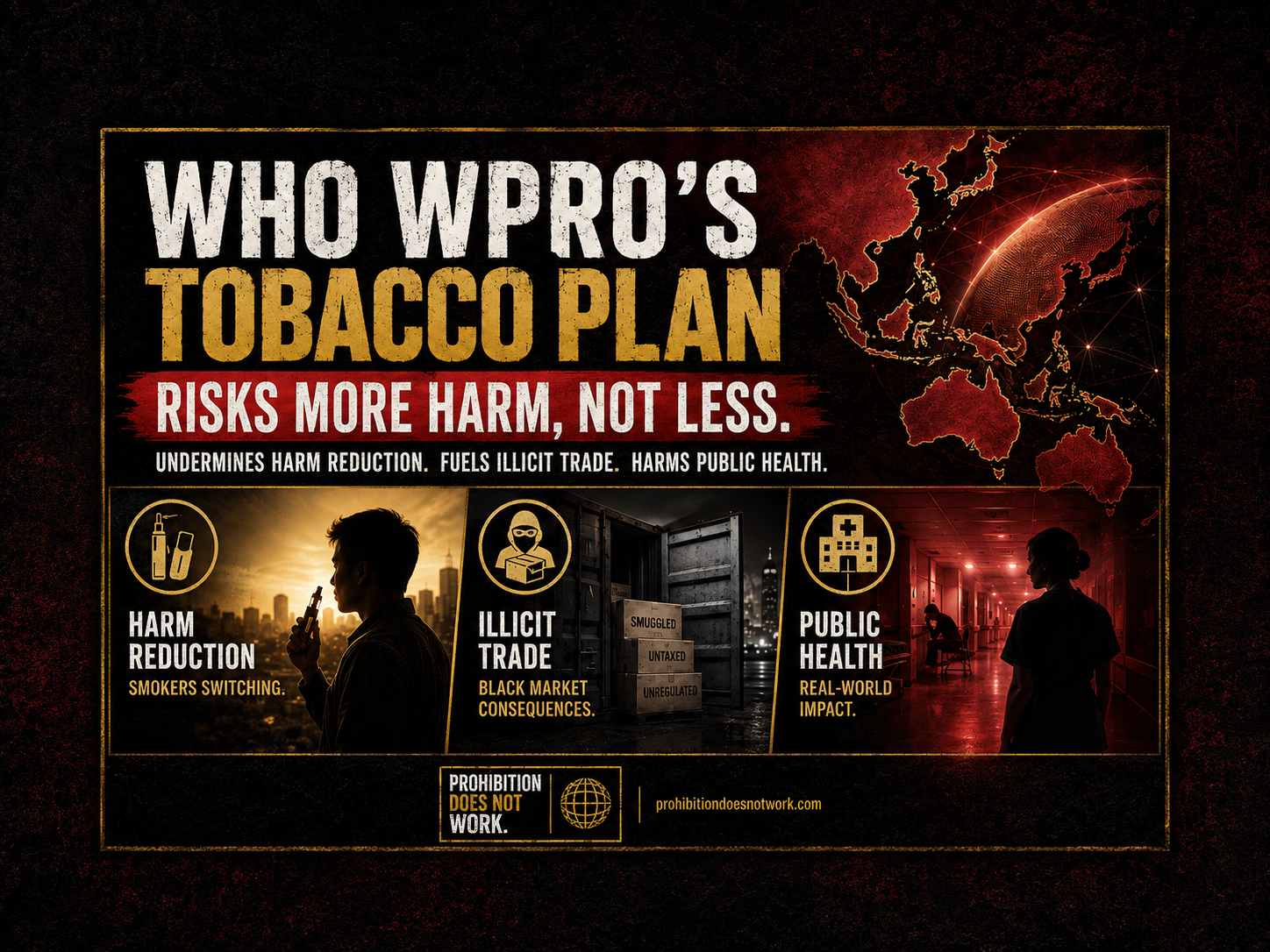

This Prohibition Does Not Work (PDNW) submission respondsto the WHO Regional Office for the Western Pacific (WHO WPRO) 2030 TobaccoControl Plan, examining its implications for WHO and FCTC tobaccocontrol policy, national governments, health ministries, finance and tradeministries, customs authorities, regulators and law enforcement.
The response examines global evidence on tobacco harm reduction,vaping and e-cigarette regulation, nicotine pouches, heated tobacco productsand smoking cessation, comparing regulatory outcomes in European Union,Australia, Japan, New Zealand, Brazil and Mexico and assessing theconsequences of prohibition and restrictive nicotine policies.
Drawing on international case studies and illicit-trade expertise, PDNW examines how vape bans, flavour restrictions, nicotine limits andrestrictions on legal nicotine products can drive illicit trade, black markets,cross-border smuggling and organised crime, while undermining ageverification, product standards, consumer protection, tax revenues andenforcement.
The report calls for evidence-based, risk-proportionate tobacco and nicotine regulation that supports adult smokers switching away from combustible cigarettes, protects young people and enables governments, customs and law-enforcement authorities to maintain effective oversight of legal nicotine markets.
The report can be downloaded HERE.
Stay up to date
Join our mailing list for expert insights and global updates.
