

Former INTERPOL Assistant Director Warns EU Nicotine Crackdown Will Fuel Organised Crime
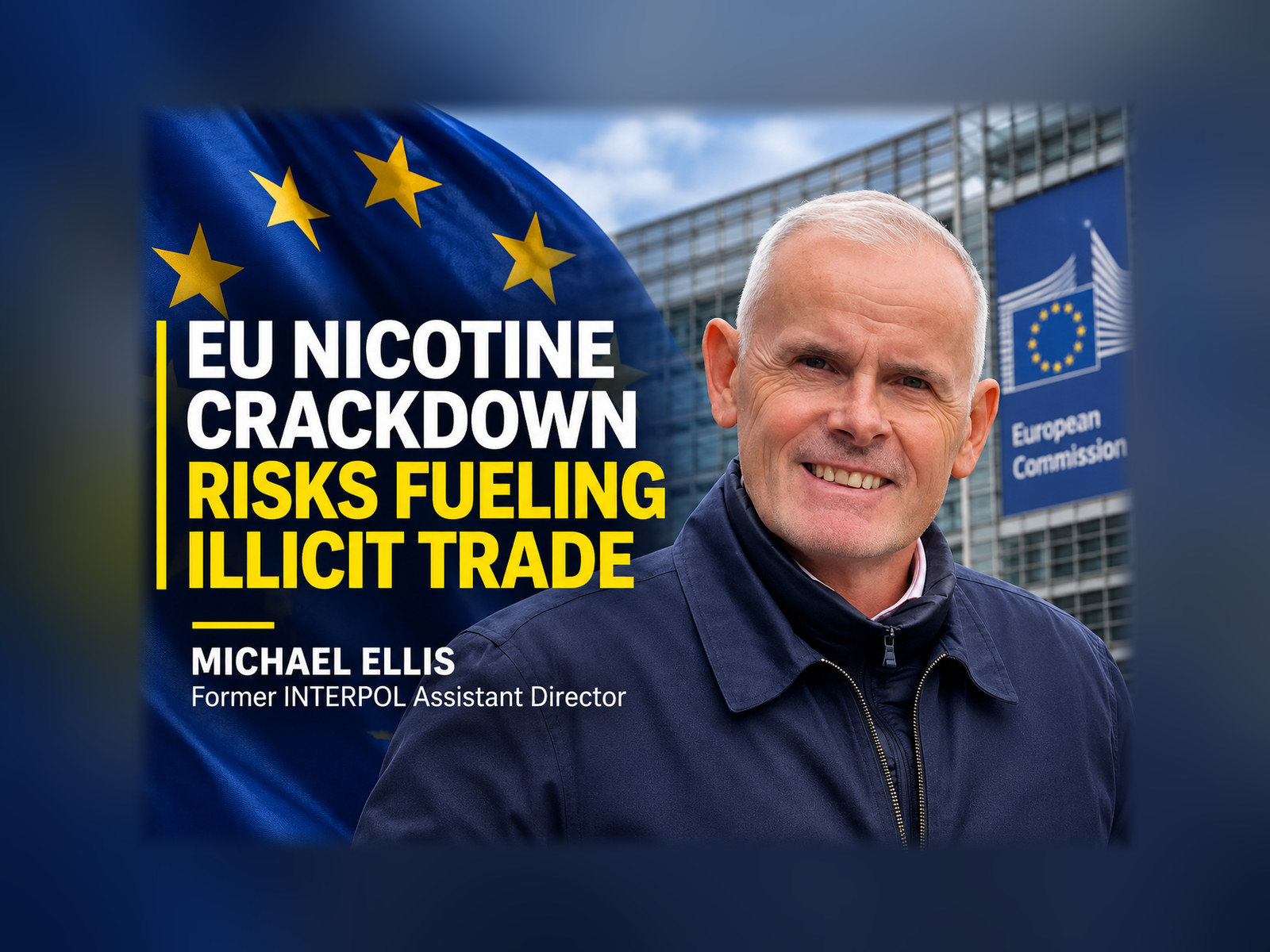

As the European Commission considers revisions to the Tobacco Products Directive, Michael Ellis, former INTERPOL Assistant Director and Advisor to Prohibition Does Not Work, has warned that sweeping restrictions on nicotine products risk handing lucrative new markets to organised crime.
Drawing on more than two decades of international law enforcement experience, the findings of the European Court of Auditors, and evidence of the consequences of prohibition in the Netherlands, Ellis urges the Commission to consider the serious implications for public health, consumer safety and illicit trade before introducing further restrictions.
His full submission follows below:
As the former Head of Interpol Anti Illicit Trade program, I have been engaged in combatting illicit for over two decades. I have been personally involved in many cross-border investigations, and have first-hand experience of the consequences that illicit trade can have on economies, public safety and the environment. I also have seen how prohibition drives consumers towards illicit suppliers, while the demand remains the same, and have witnessed how whenever regulation becomes prohibition, black markets grow.
I have been following the European Commission revision of the Tobacco Products Directive and Tobacco Advertising Directive and wanted to make-reference to the European Court of Auditors Special Report 23/2026.
This report determined that the Commission lacked a reliable EU-wide estimate of the illicit tobacco market and identified how the Commission had only fragmented information, with a limited assessment of the impact of the proposed EU action. Worryingly they further estimated that annual revenue loss by illicit trade to the EU and its member states would be approximately €13 billion, in addition to the consequences for public health and organized crime.
It seems obvious from the Auditors report bringing in the revision of the TPD, the EU Commission will be creating new illicit markets – The EU’s own auditors have highlighted how poorly the Commission understands and controls existing illicit conditions. Perhaps conducting a proper illicit-trade impact assessment before prohibiting genuine supply, with proportionate regulation rather than prohibition, and better cross-border enforcement will provide a more balanced approach to the issue?
While in complete support of the objective of protecting public health, I want to stress how illicit markets don't just benefit criminals; they mean no meaningful product standards, no age verification and no consumer protections. Prohibition could undermine the very objectives the Commission is pursuing.
I also wanted to point out that I understand eight ministers are calling for the shift towards a proactive and preventive framework, ultimately looking at a proposed a “market freeze”, under which no new nicotine or nicotine-like products, devices, or even non-nicotine products resembling them could enter the EU market. It appears that this proposal, based on the decision of a small group of ministers is not currently being an announced by the Commission proposal which creates confusion.
I would urge the Commission to consider the impact on illicit markets before supporting such restrictive measures. The intention to prohibit and ban all non-TPD regulated products containing nicotine or substances with nicotine-like properties as a consumer product will not impact on consumer demand.
Also, calling for a ban on all flavour products, standardized products and devices with plain packaging and including measures banning cross-border distance sales in the EU, targeting of single-use electronic cigarettes, and requiring online platforms to prevent promotional content from being uploaded will also not impact on consumer demand. The result of these measures will only benefit crime gangs who will benefit from the growth in demand for illicit non -regulated and substandard products. Our own research has shown how Netherlands ban on flavoured vapes failed to address youth vaping concerns. Moreover, it undermined youth prevention so significantly that underage access doubled during last years: from 3.7% in 2022 to 7.6% in 2024.
At the same time, almost 70% of adult vapers continue to use nominally banned products: 27% buying them from abroad, 31% from illicit online sellers, and 33% from local shops, demonstrating a complete disregard of the ban.
It remains my opinion that measures of this kind, by banning entire legal product types, the Commission will create further challenging enforcement demands and displacing consumer demand will push consumers towards alternative illicit, unsafe and unregulated suppliers.
I have previously submitted my views through the Commission’s Call for Evidence and Open Public Consultation where I described how prohibition and over regulation will drive consumers underground into the black economy.
I am writing once again to ensure my concerns remain visible to the Commission while the proposal is finalized.
Stay up to date
Join our mailing list for expert insights and global updates.
